
DevSecOps
Shift Left Approach
8 min readDevSecOps
Introduction
The software delivery lifecycle consists of requirements, design, development, testing, release, production. For most of the industry's history, quality and security lived at the right end of that line. Code was written, then thrown over a wall to QA; releases were assembled, then handed to a security team for a penetration test days before launch.
Shift left is the argument that this ordering is backwards, and it's the considerably less simple discipline of restructuring your pipeline, tooling, and team responsibilities so that defects are caught as soon as possible.
What has changed in the last decade is that shift left stopped being a testing philosophy and became the organizing principle of DevSecOps. Security scanning, compliance checks, infrastructure validation, and operational readiness have all migrated leftward into the developer's inner loop.
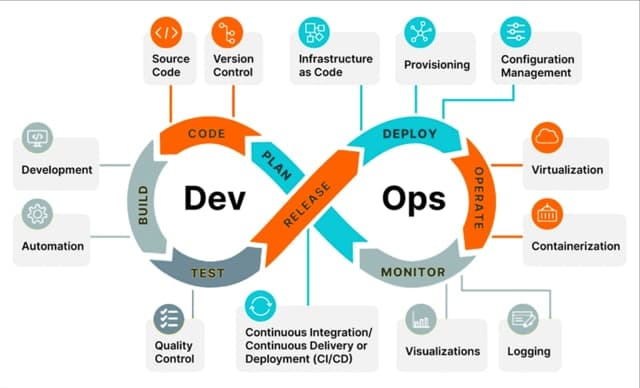
The Economics, Stated Precisely
It's worth being precise about why early is cheaper, because the reasons dictate the design of a good shift-left pipeline.
The first reason is context. A developer who wrote a function four minutes ago holds its entire context in working memory; the fix is often a one-line change made without breaking stride. The same defect surfacing three weeks later in a staging environment arrives stripped of context, and someone has to reproduce it and reload the mental state that existed when the code was written.
The second reason is batching. Late-stage quality gates evaluate large batches of accumulated change, and when the gate fails, the failure has to be attributed to a specific change within the batch. Early gates evaluate one change at a time, so attribution is free. This is also the same argument that justifies continuous integration itself: shift left is CI's logic applied to every other kind of verification.
The third reason is blast radius. A vulnerable dependency caught in a pull request affects a branch. The same dependency caught by a scanner running weekly against production affects every deployed service, and remediation now means coordinated redeployment rather than a version bump in one lockfile.
The Layers of a Shift-Left Pipeline
A mature shift-left implementation is a series of verification layers.
Layer 1: The Editor and Pre-Commit
The earliest feedback comes from language servers, type checkers, and linters in the IDE. One layer out sits the pre-commit hook, which runs fast checks before a commit is even created. The pre-commit framework has become the de facto standard for managing these:
.pre-commit-config.yaml
repos:
  - repo: https://github.com/gitleaks/gitleaks
    rev: v8.18.2
    hooks:
      - id: gitleaks
  - repo: https://github.com/astral-sh/ruff-pre-commit
    rev: v0.4.4
    hooks:
      - id: ruff
      - id: ruff-format
  - repo: https://github.com/antonbabenko/pre-commit-terraform
    rev: v1.89.1
    hooks:
      - id: terraform_fmt
      - id: terraform_validate
The single highest-value pre-commit hook is secrets detection (gitleaks, detect-secrets, trufflehog). A credential that reaches a remote repository must be treated as compromised and rotated even if the commit is deleted, because forks, clones, and CI caches all retain history, and scrapers watch public GitHub in real time: stolen AWS keys see first use within minutes of exposure.
The discipline with pre-commit hooks is speed: they must complete in a second or two. Anything slower and developers will --no-verify around them, at which point the layer silently stops existing. Slow checks belong in CI, not in the commit path.
Layer 2: Static Analysis in CI (SAST)
Static application security testing analyzes source code for vulnerability patterns without executing it. Modern SAST tools like Semgrep and CodeQL are dramatically better than their predecessors because they are programmable. Instead of a fixed rule set with a fixed false-positive rate, you write organization-specific rules to flag vulnerabilities.
Scanning an established codebase produces thousands of findings; blocking merges on all of them halts the organization, and asking developers to wade through them destroys the tool's credibility on day one. The sustainable pattern is to baseline the existing findings as tracked debt, then hold the line: no new criticals enter through pull requests. The backlog burns down separately, on its own schedule.
Layer 3: Infrastructure and Policy as Code
Infrastructure as code means the mistakes get written down too, a world-readable storage bucket, a security group open to 0.0.0.0/0, an unencrypted database, all scannable in the pull request, before anything is provisioned. Checkov and Trivy cover Terraform, CloudFormation, and Kubernetes manifests with hundreds of built-in checks.
The deeper version of this layer is policy as code: encoding organizational rules in a policy engine like Open Policy Agent so they're evaluated mechanically, in CI and again at deploy time. A Rego policy that rejects privileged containers looks like this:
policy/privileged.rego
package kubernetes.admission

deny[msg] {
  input.request.kind.kind == "Pod"
  container := input.request.object.spec.containers[_]
  container.securityContext.privileged == true
  msg := sprintf("privileged container not allowed: %v", [container.name])
}
The same policy runs in CI and in the cluster's admission controller (enforcement no one can route around). That pairing, advisory early and mandatory late with identical logic in both places, is the structural pattern that makes shift left trustworthy: the early check is a faithful preview of the real gate, never a different, looser rule that lets surprises through later.
Layer 4: Artifact Integrity
The rightmost part of shifting left is making sure what you verified is what you ship. Container signing with cosign and provenance attestation under the SLSA framework cryptographically bind an artifact to the pipeline run that produced it, and an admission policy that requires valid signatures closes the loop: nothing reaches production that didn't pass everything required.
Beyond Security: Shifting Testing and Operations Left
Security gets the attention, but the same principle restructures testing and operations.
Testing shift left is mostly fast unit tests on every commit, a smaller layer of integration and contract tests, and only a few slow end-to-end tests. Contract tests matter most in microservices, since a consumer's expectations of a provider's API get verified in the provider's own CI, catching breaking changes in the pull request instead of a staging environment three teams away.
Operations shifts left when production readiness is designed rather than retrofitted. SLOs defined alongside the feature, structured logging and trace propagation present from the first commit, resource limits and health checks reviewed in the same pull request as the code they govern. The alternative is precisely the late-stage discovery the ideology exists to eliminate.
Where Shift Left Goes Wrong
The failure modes are as instructive as the successes, because shift left implemented carelessly is worse than not doing it at all.
Dumping instead of shifting. The most common failure is renaming "the security team's backlog" to "the developers' backlog" without adding tooling, context, or time. Shifting left means moving feedback earlier, not moving labor sideways. If a developer receives a finding, it should arrive in their workflow (the PR, not a separate portal), with the fix either automated or clearly described, at a moment when acting on it is cheap.
False-positive debt. Every noisy check spends credibility, and credibility is the currency that makes developers act on findings. A gate that constantly goes off gets bypassed, first informally, then culturally. The discipline is to run new checks in advisory mode, measure the signal-to-noise ratio, suppress or fix the noise, and only then make the check blocking. A blocking check should carry an implicit promise: if it fails, it is worth your attention.
Gates without brakes on the gate count. Each verification layer adds latency to the feedback loop it lives in, and pipeline latency is itself a defect. Fast checks (seconds) belong at pre-commit; medium checks (a few minutes) belong in PR CI; expensive analysis belongs in merge queues or scheduled runs against main. A pipeline that takes forty minutes to tell a developer about a formatting error has shifted the check left and the developer's attention elsewhere.
"Number of findings" is the vanity metric of shift-left programs: it rises when you add scanners and falls when you suppress rules, and neither movement means anything. The metrics that reflect reality are time from finding to fix, the escaped-defect rate (issues found in production that a left-side gate should have caught), the percentage of findings resolved without security team involvement, and the age distribution of the accepted-risk backlog. Those numbers describe whether feedback is actually arriving early and being acted on, which is the entire point.
Conclusion
Shift left is the recognition that defects are cheapest at the keyboard, backed by an architecture that makes that true: layered verification, each check placed as early as its speed and signal quality allow, advisory before it is blocking, identical in preview and enforcement. Done well, it is nearly invisible; developers simply experience a world in which the pull request tells them everything that would have gone wrong, while it still costs a keystroke to fix. Done badly, it is a wall of red X's and a workforce learning to route around its own safety systems. The difference between the two is not the scanner you choose: it is whether you treat the people on the left end of the line as the customers of the system, or as its unpaid staff.